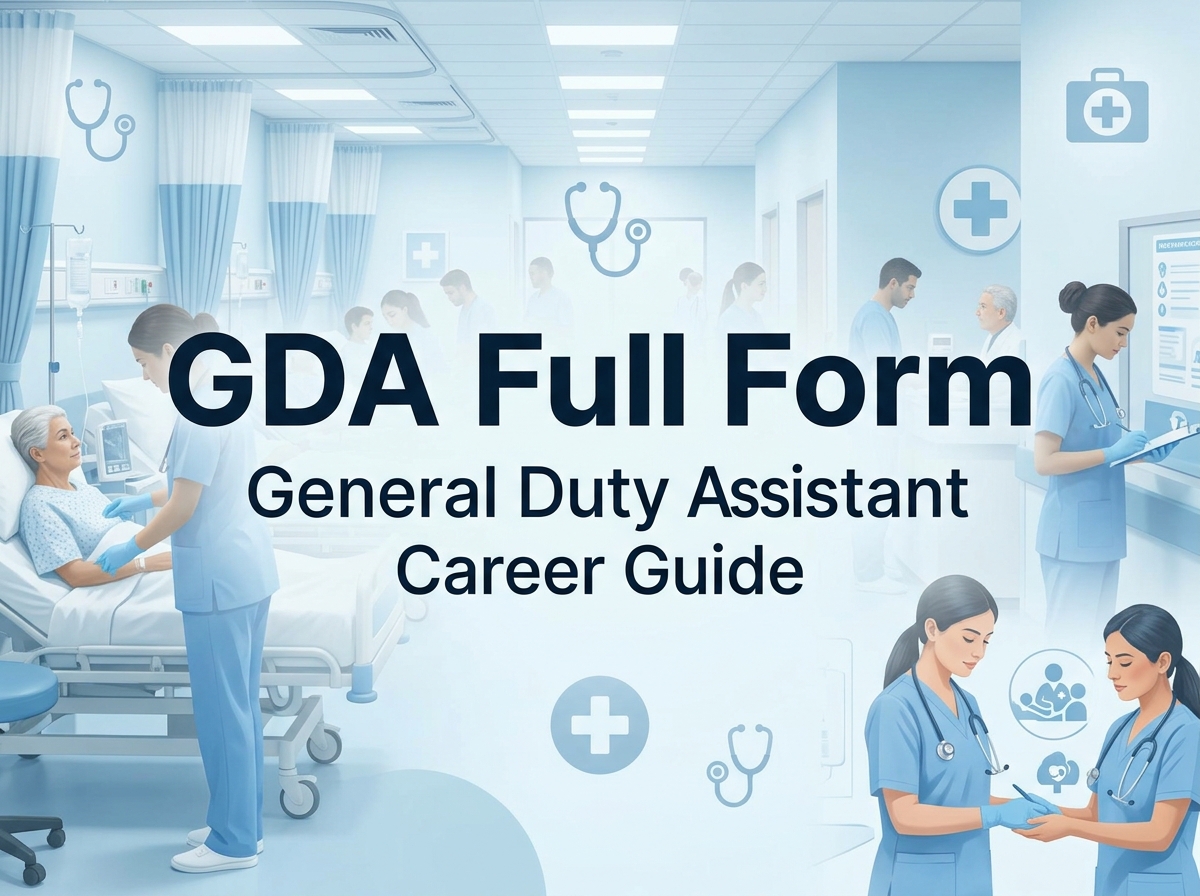
The acronym GDA appears in multiple industries, but in healthcare and vocational education, it most commonly stands for General Duty Assistant. This role has become increasingly important in modern healthcare systems, where trained support staff assist nurses, doctors, and patients in delivering efficient medical care.
Quick Answer: The full form of GDA is General Duty Assistant. It is a healthcare support professional responsible for assisting patients with daily activities, maintaining hygiene, supporting nursing staff, and ensuring basic patient care in hospitals, clinics, nursing homes, and healthcare facilities.
Quick Facts About GDA 📊
| Feature | Details |
|---|---|
| Full Form | General Duty Assistant |
| Primary Industry/Field | Healthcare and Medical Services |
| Year Introduced/Invented | Formalized through healthcare skill development programs in the early 2000s |
| Core Purpose | Providing basic patient care and healthcare support |
| Related Terms | Nursing Assistant, Patient Care Assistant, Healthcare Attendant, Caregiver, Hospital Assistant |
What is General Duty Assistant? A Complete Overview 🧠
A General Duty Assistant (GDA) is a trained healthcare support worker responsible for assisting patients and medical professionals in healthcare environments. While doctors and nurses focus on diagnosis and treatment, GDAs provide essential support services that ensure patient comfort, safety, and well being.
The role serves as a bridge between patients and healthcare providers. A General Duty Assistant helps patients with routine daily activities, including mobility support, personal hygiene, feeding, transportation within healthcare facilities, and monitoring basic health conditions.
Modern healthcare systems rely heavily on GDAs because patient care extends beyond medical procedures. Patients often require emotional support, physical assistance, and continuous observation throughout their recovery process. A GDA contributes significantly to these aspects of care.
Healthcare facilities such as hospitals, rehabilitation centers, nursing homes, home healthcare agencies, and diagnostic centers employ GDAs to enhance patient experiences and improve operational efficiency. Their work helps reduce the workload of nurses and allows healthcare professionals to focus on specialized clinical responsibilities.
The increasing demand for healthcare services worldwide has made the General Duty Assistant profession one of the fastest growing support roles in the medical sector.
The History and Evolution of GDA 📜
The concept of healthcare assistants has existed for centuries. Historically, hospitals employed attendants and caregivers to support patients with non medical tasks. However, these roles were largely informal and lacked standardized training.
As healthcare systems expanded during the twentieth century, hospitals recognized the need for dedicated support staff capable of assisting medical professionals while ensuring patient comfort. This led to the development of structured healthcare assistant programs.
The formal designation of General Duty Assistant gained popularity through healthcare workforce development initiatives aimed at addressing shortages of trained healthcare personnel. Various healthcare training organizations introduced specialized certification programs to prepare individuals for patient care responsibilities.
Several factors accelerated the growth of the GDA profession:
• Increasing healthcare demands
• Aging populations
• Growth of long term care facilities
• Expansion of home healthcare services
• Rising patient expectations
• Need for cost effective healthcare support
Today, GDAs receive professional training in patient handling, infection control, communication skills, first aid, healthcare ethics, and emergency response procedures. Modern healthcare institutions consider them indispensable members of multidisciplinary care teams.
How Does GDA Work? (Core Mechanism) ⚙️
The daily responsibilities of a General Duty Assistant follow a systematic approach focused on patient care and support.
1. Patient Assessment and Observation
GDAs begin by understanding patient requirements, mobility limitations, and care instructions provided by medical staff.
2. Assisting with Personal Hygiene
Patients often require support with:
• Bathing
• Grooming
• Dressing
• Oral care
• Toileting assistance
Maintaining hygiene helps prevent infections and improves patient comfort.
3. Mobility Assistance
GDAs help patients move safely within healthcare facilities. This may include transferring patients between beds and wheelchairs or assisting them during walks.
4. Feeding and Nutritional Support
Patients who are elderly, disabled, or recovering from surgery may require assistance during meals.
5. Monitoring Basic Health Indicators
While GDAs do not diagnose medical conditions, they may observe and report:
• Temperature changes
• Unusual symptoms
• Patient discomfort
• Behavioral changes
• Mobility concerns
6. Maintaining Clean Environments
They help ensure patient rooms, beds, equipment, and surroundings remain clean and organized.
7. Supporting Healthcare Teams
GDAs assist nurses and physicians by preparing patients for examinations, transporting equipment, and helping coordinate patient care activities.
Types or Categories of GDA 🗂️
General Duty Assistants may work in different healthcare settings and specialize in various patient care environments.
Hospital General Duty Assistant
These professionals work in hospitals supporting inpatient care, emergency departments, surgical units, and specialized wards.
Home Healthcare Assistant
Home healthcare GDAs provide personalized care services in patients’ homes, helping individuals maintain independence while receiving necessary support.
Elderly Care Assistant
This specialization focuses on caring for senior citizens in nursing homes, assisted living facilities, and geriatric care centers.
Rehabilitation Assistant
Rehabilitation GDAs assist patients recovering from injuries, surgeries, strokes, or chronic illnesses.
Palliative Care Assistant
These professionals support patients with serious or terminal illnesses by focusing on comfort and quality of life.
Pediatric Care Assistant
Pediatric GDAs work with children in hospitals, clinics, and specialized healthcare facilities, providing age appropriate care and support.
Advantages and Disadvantages of GDA ⚖️
| Advantages | Disadvantages |
|---|---|
| High demand in healthcare sector | Physically demanding work |
| Direct contribution to patient care | Long working hours may occur |
| Multiple employment opportunities | Emotional challenges when caring for seriously ill patients |
| Affordable training programs | Shift based schedules |
| Career growth opportunities | Exposure to healthcare risks |
| Valuable healthcare experience | Requires patience and compassion |
| Opportunity to work in diverse settings | Can involve repetitive tasks |
Real World Applications and Uses 🌍
Hospitals and Medical Centers
Hospitals employ GDAs to assist patients throughout their treatment journey. They help manage patient mobility, maintain hygiene standards, and support nursing teams during daily operations.
In busy healthcare environments, their contributions significantly improve patient care efficiency.
Nursing Homes and Elderly Care Facilities
Elderly residents often require assistance with daily activities and personal care. GDAs provide continuous support while helping seniors maintain dignity and comfort.
Their role becomes especially important for residents with limited mobility or chronic health conditions.
Home Healthcare Services
Many patients prefer receiving care at home rather than staying in hospitals. Home healthcare GDAs assist with medication reminders, mobility support, personal hygiene, and routine monitoring.
This approach promotes patient independence and reduces healthcare costs.
Rehabilitation Centers
Patients recovering from accidents, surgeries, or neurological conditions often require structured support during rehabilitation.
GDAs assist therapists and healthcare professionals by helping patients perform prescribed activities and exercises safely.
Community Health Programs
Healthcare organizations frequently deploy GDAs in community outreach initiatives, vaccination programs, and public health campaigns.
Their involvement helps improve healthcare accessibility in underserved areas.
Other Meanings of GDA (Alternative Full Forms) 🔄
| Context/Industry | Full Form | Brief Definition |
|---|---|---|
| Healthcare | General Duty Assistant | Healthcare support professional providing patient care |
| Urban Development | Gujarat Development Authority | Government planning and development body |
| Real Estate | Greater Development Authority | Regional urban development organization |
| Computing | Graphics Display Adapter | Hardware component for display processing |
| Information Technology | Global Data Access | Enterprise data management system |
| Engineering | Geometric Dimensioning Analysis | Measurement and design evaluation process |
| Finance | Gross Domestic Assets | Total domestic assets owned within a country |
| Education | Graduate Diploma in Accounting | Professional accounting qualification |
| Government | General Development Authority | Public infrastructure development organization |
| Defense | Ground Defense Area | Designated military protection zone |
| Telecommunications | Global Distribution Architecture | Network distribution framework |
| Business | Growth Development Analysis | Strategic business evaluation methodology |
Frequently Asked Questions ❓
What is the full form of GDA?
The full form of GDA is General Duty Assistant. It refers to a trained healthcare support professional who assists patients and healthcare staff in medical facilities.
What are the duties of a General Duty Assistant?
A GDA assists patients with personal care, mobility, feeding, hygiene maintenance, and basic health observation while supporting nurses and healthcare teams.
Is GDA a healthcare profession?
Yes. GDA is a recognized healthcare support profession that plays an important role in hospitals, nursing homes, rehabilitation centers, and home healthcare services.
What qualifications are required for GDA?
Requirements vary by institution and country, but most GDA programs require secondary education and completion of specialized healthcare assistant training.
Can a GDA work in hospitals?
Yes. Hospitals are among the largest employers of General Duty Assistants, where they support patient care and assist healthcare professionals.
What is the difference between a GDA and a nurse?
A nurse performs clinical assessments, administers medications, and provides advanced medical care. A GDA focuses on basic patient support, comfort, and daily care activities.
Is GDA a good career option?
Yes. Growing healthcare demand, aging populations, and expanding medical services have created strong employment opportunities for trained General Duty Assistants.
Conclusion 🎯
The GDA full form is General Duty Assistant, a vital healthcare support role that contributes significantly to patient care and healthcare operations. GDAs assist patients with daily activities, support medical teams, and help maintain safe, comfortable healthcare environments. As healthcare systems continue expanding globally, the demand for skilled General Duty Assistants is expected to grow, making it an attractive and meaningful career path for individuals interested in healthcare services.
About the Author